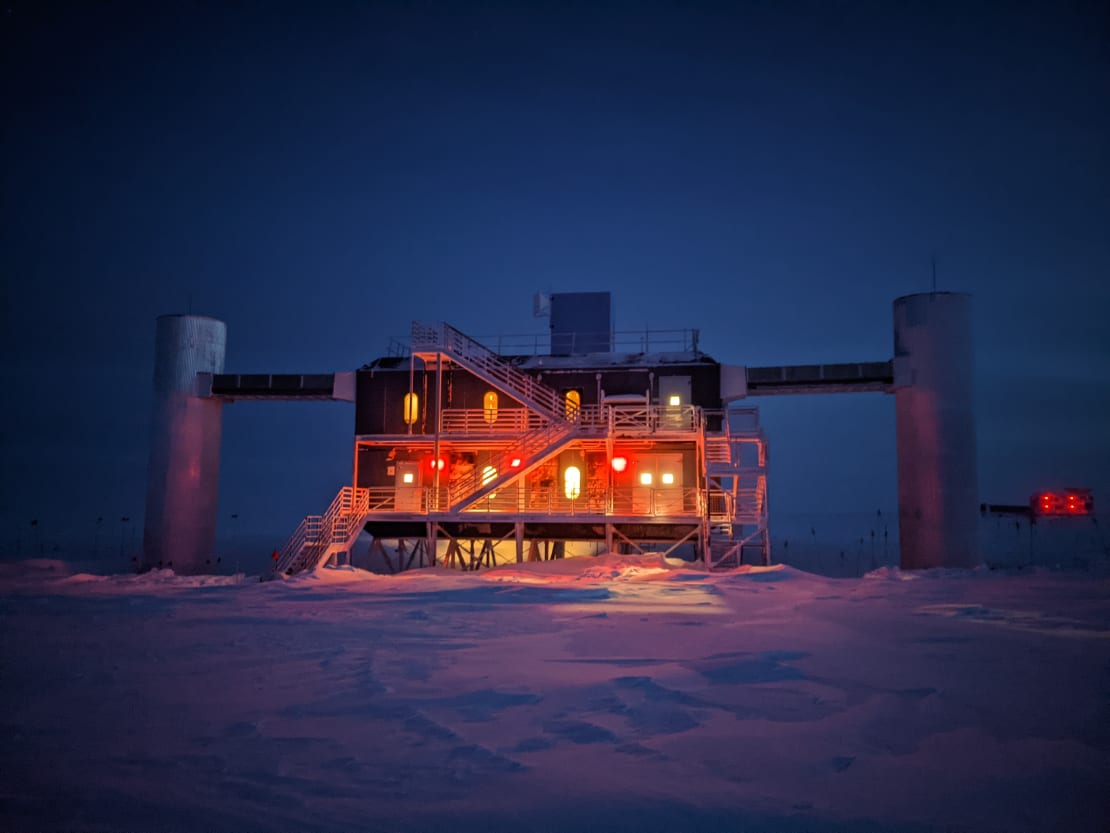
🥉🚨 Bronze alert - IceCube observation of a high-energy neutrino candidate event at 2026/10/20 03:58:53 UTC. Find out more at: https://gcn.nasa.gov/circulars/45994.
#IceCubeAlert

Real-Time Alerts
IceCube is a unique telescope that offers an uninterrupted view of almost the full sky and is capable of detecting neutrinos at the highest energies while still being sensitive to much lower energy neutrinos. The dynamic range of the instrument is from GeV to hundreds of TeV and above, with the observation of cosmic neutrinos at energies approaching 10 PeV. Detection of MeV neutrinos is possible provided they are produced in bursts, as is the case for a Galactic supernova explosion.
IceCube real-time alerts trigger on a series of neutrino signatures with a high chance of identifying a neutrino of astrophysical origin, thus pointing to interesting regions of the sky, and notify the international community when an interesting cosmic phenomenon could be observed.
Outreach for people of all ages
IceCube has a long history of outreach activities that range from small group presentations to large collaborative art-science installations. Capitalizing on the appeal of the South Pole detector and building upon established collaborations, IceCube continues to find new ways to introduce IceCube science to an ever broader audience.